It’s the coldest week of the year in Sydney yet but my heart has been sparked and enlivened by the artist’s spirit to make their art at any cost.
It’s a rare pleasure to be able to see smaller, local film makers put their vision to the big screen as well as get interest from movie goers to come and see their film when there is so much competition from larger overseas productions. It doesn’t carry with it the intrinsic grandeur, gloss and mystery that American filmmaking carries for example, or it’s a tougher sell for the crowd because of the lack of star power on display. Or so they think.
Life really is like a box of chocolates. You never know what you’re going to get 😉
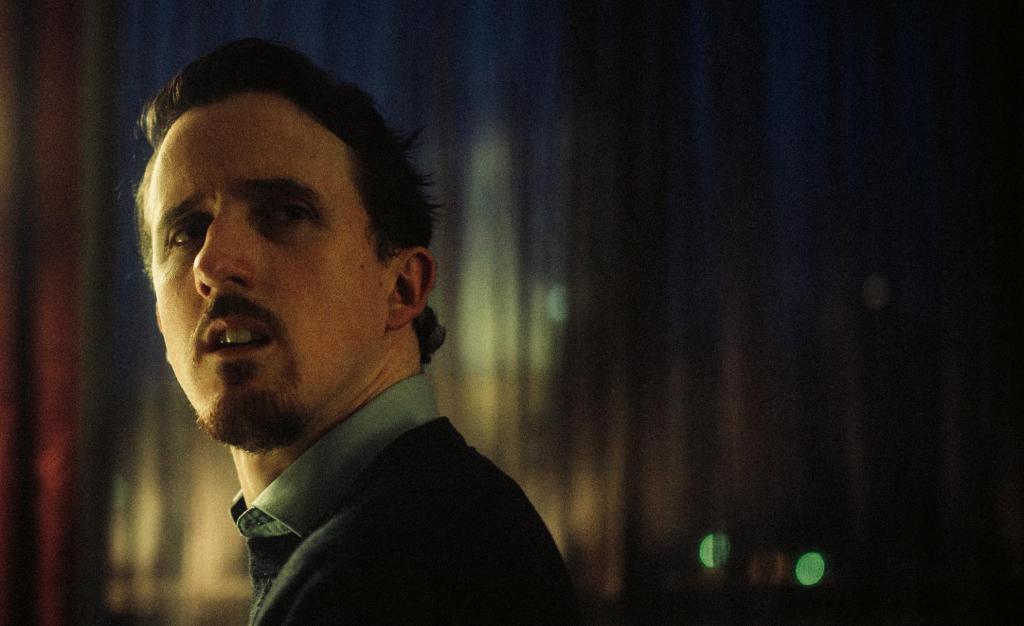
‘In the Room Where He Waits’ is directed by Timothy Despina Marshall. This is his feature film debut, financed by Screen Queensland and Queer Screen, and gives us a bottle film concept where Tobin, a young queer actor, has come back to Australia for an important event, leaving the United States where career and a relationship have kept him tethered for a while. The thing is, he has to stay in hotel quarantine for two weeks before he is able to see his family and attend to a family matter that hangs over him and haunts his thoughts.
I don’t want to give away too much but I thought this was a pretty great debut.
Not perfect, but I think it achieved what it set out to do and made me feel for Tobin as well as relate to him on some level, and I think audiences will find themselves in the same boat and will hopefully come out of the theatre pondering their life’s trajectory, ambitions, and the apple tree they’ve grown and fallen from.
What I loved most is the subtle yet very layered interiority of the main character, Tobin. He has experienced loss and abandonment on a number of levels when we meet him and experience his arch in the film and I think that’s a testament to the writing of his character and the throughline of the story. It also was brought to life and made pulpable to the audience by the lead, Daniel Monks, who carried the film with great prowess, portraying a character who is an actor themselves and has probably faced similar challenges to Daniel. In that way, it’s quite meta, and I’m always impressed by actors and creators who work with levels of reference like that.
I’ve yet to mention that this is a horror film and when I realised that it’s a film that recalls the Covid lockdowns, it definitely added another layer of unease to the viewing experience. I was curious whether the film was filmed recently or during the time of Covid lockdowns, and in a Q&A after the film showing, the director Timothy Despina Marshall confirmed that the film was in fact shot in the span of three weeks in 2021. That time seems long gone now but it’s crazy to realise that it wasn’t even five years ago when it all began and yet we still feel its ghost haunting us and peering out of the shadows every now and then in our current existence.
Queer film and artistic expression is something I always resonated with but admit that I do not have that much exposure to when it comes to the Australian Queer Film scene. When exploring queer film history and the films that have made an undeniable impact, it has mainly been the US and Europe who are leading the charge with displays of the most talked about queer storylines in film. With directors from John Waters to Gus van Sant, Gregg Araki, Todd Haynes and the Wachowski sisters, to Luca Guadagnino and Jane Schoenbrun putting their stamp on the film community in a boisterous and highly memorable manner, it makes you think about the queer filmmakers and queer stories put to film from this side of the world.
We do have of course The Rocky Horror Picture Show which was written by Richard O’Brien, who was born in England and did return there in his mid-twenties, but grew up in New Zealand during his childhood and young adult years (he maintains both citizenships).
Then there’s the Australian classic The Adventures of Priscilla, Queen of the Desert which was written and directed by Stephan Elliott. And both the older queer film Heavenly Creatures (directed by Peter Jackson of Lord of the Rings fame), and the newer addition to the canon The Power of the Dog (directed by Jane Campion). The latter two are however not helmed by queer, or at least openly queer filmmakers, but should we care?
That is something I am very keen to ask my interviewee, Timothy Despina Marshall about!
Read on to get to know him better and learn about his thoughts on his craft and the making of In the Room Where He Waits, his favourite films and filmmakers, and the wider filmmaking community and how queer artists and stories fit into it. To finish off our interview we play a quick fire movie question game, and he shares his top four favourite films of all time! I hope you enjoy getting to know Tim like I did. He was truly a joy to interview.
We conducted this interview on a grey and sporadically rainy day in Sydney while Tim dialled in from a rather cold Melbourne. After exchanging our greetings, we got into the questions. (My questions and dialogue are in bold text. This interview has been transcribed with care and only rewritten for grammar to make it flow better as a read.)
How have the last few weeks been for you with the film tour?
Yeah, really great. Yeah, it’s been lovely. Getting a good response to the film and traveling around a bit and meeting people. It’s been really lovely actually.
That’s awesome! And have you found a distributor for it yet?
Yeah, so we already have an Australian distributor, which is why we’re doing the cinema release. So yeah we’ve got a distributor here and now we’re doing the next step, which will be the overseas stuff.
Yeah, cool. And where can others go and see the film now or in the future?
Not anywhere yet. Yeah, I mean, we’ve got a screening on Sunday, which is our final screening, and we’ve got the screening in Canberra on Sunday and then that’s kind of it for now. And then basically I’m just telling people to follow the film’s Instagram and we’ll post all the details there because we’ve got some festival dates that we’re waiting on sales and all that sort of fun stuff, so yes.
All good. Alright, so how I’ve structured the interview is I have some questions and then towards the end we’ll do a quick fire, fun little game.
That’s so fun! I love it. I love it. Yeah, awesome!
Well firstly I’d just like to say that I haven’t stopped thinking about the film since I’ve seen it. It comes up in my memory periodically and yeah, I just found it a really powerful meditation and portrait of loss and that fear of loneliness and what you are and not in control of, like in terms of your looks or talent and that feeling of imposter syndrome. And I thought, that’s just overall a very human experience, even if you’re not an actor like the character in the film or you’re not queer, it’s just an overall human experience. And I wanted to commend you and your co-writers for writing this piece because it really touched me, and I hope it does the same for other viewers.
I’m so glad to hear that. I’m really glad to hear that. Yeah, I mean, it was always something that I hoped would be universal in terms of like, what it was kind of speaking to. So that’s, that’s so nice to hear. I love that.
Yeah, and just in terms of the inspirations, I was wondering because when I was watching it, I was thinking, this has little fragments of The Shining, or it brought up bits of like Rosemary’s Baby with the feeling of claustrophobia and dread. And funnily enough I saw a play of Opening Night, which is based on the Cassavetes film about the actor and their inner turmoil, and I was wondering if any of those were inspirations for this piece.
Oh my God, it feels so spot on. So definitely The Shining. I mean, that’s one of the greatest horror movies of all time so it’s very hard for that not to be a reference. Probably more so Repulsion than Rosemary’s Baby in terms of the way that Repulsion dealt with the manifest of the space and how it all became like her fears becoming really external in that space. I really loved how that film did that. And yeah Opening Night is a massive inspiration, it’s one of my favourite films actually. Huge inspiration. God, I’m such a Cassavetes fan. I was really inspired by that. I love films that use other text as allegory, like the play that they’re doing in Opening Night is not referencing something that’s real, I suppose, but I love how the play and reality kind of play out in tandem in that film, and I’ve always really admired films that do that. And also I think the way that the character unravels in Opening Night has always really stuck with me. Gosh, I could talk about that film all day! The way they use the haunting and the ghosts and the supernatural in that film. Even though it wasn’t really a horror, the way that they used that element of horror to basically bring her fears to the surface, I thought was really profound. So that was a huge inspiration for me for sure, yeah.
And with your upcoming films and what you hope to do in the future. Are you interested in doing more character studies or you want to kind of branch out and do some other things?
Look, I think character studies is really where it’s at for me. Like in terms of what I find really fascinating and really interesting. Yeah, the next film that I’ve got in development is very much that again, very much a character study and I think that’s kind of, I think where I come up with ideas. I’m always thinking about either themes or thematics, you know, what anchors the film. And then from there it’s usually getting to know the character and getting really obsessed with figuring out who this person is before I go and actually write the story. Yeah, that’s kind of my process that I really love.
Yeah, I myself really love character studies, so I’ll be on the lookout for that one when it comes to the screen. And how would you define your voice and vision when it comes to your filmmaking style and the stories you’re interested in telling. You mentioned character studies. Is there anything else that kind of defines your style either visually or storytelling wise?
Yeah, I mean, obviously queer storytelling is a really big thing for me. It’s always been something that I’ve been really passionate about. I’m so interested always in the evolution of queer storytelling, thinking about queer stories on screen. So that’s a big thing. Style wise, I think, because I love playing with different styles, I think for me it’s always like getting really excited about the language of cinema. So how the story on screen becomes something incredibly cinematic, you know, and how the language of cinema is used to really invite the audience into the emotion and the experience of the story and of the character. I just love films so much that use a really rich score or rich sound design, really interesting cinematography and visual motifs that are always led by emotion. They’re really like a motion forward in terms of that’s their goal, that’s their aim is putting you in that emotional space. So yeah, I think in terms of style that’s what I would say that I get excited by.
And with the story you’re working on currently, are you allowed to reveal any sort of bits and pieces about it, kind of roughly what it’s going to be about, or you want to keep it under wraps?
It’s still pretty early days on that one, so I might, I might hold off on talking about it just because it’s still shaping, but yeah, I’m excited about it. It’s going to be something queer as well.
Nice. And who were, or are your current film making inspirations when it comes to directing, writing.
I love that question. That’s a great question. Gosh, but it’s hard to narrow it down, really. Definitely Jonathan Glazer is one of them I really love. He’s really brave and bold. Very singular, I guess, filmmaking style.
It’s nothing like my own style, but Miranda July is a big influence for me. I just absolutely adore Miranda July; early Todd Solondz films; Gregg Araki, gosh, it’s such a long list. Cassavetes. Yeah, my goodness, I feel like I’m gonna finish the interview and be like, oh these ones too (laughs)!
No, I’m glad you brought up Araki because it’s going to come into play later in the interview. Yeah, I love Gregg Araki and Jonathan Glazer. (Glazer) has done so few films but they’re all so prolific and amazing pieces of art. I love it.
Yeah, and I suppose Andrew Haigh (director of acclaimed queer films Weekend and All of Us Strangers) to an extent as well. In terms of queer filmmaking for sure.
I was also curious why film as a medium for your art?
I dunno, I mean, it’s just something that I have always been really captivated by ever since I was a kid. I just fell in love with cinema and my first job when I was 15 years old was at a cinema, and I worked at cinemas all throughout my teenage years and into my early twenties and it just was something that, yeah, it was magic. It was something really magic about that to me. So, you know, my teenage years were completely filled with cinema and seeing movies for free because I was working at cinemas the whole time so I just sort of soaked up cinema and it became this really magical medium for me. And I love TV but I think film is always going to be the thing for me because I just think there’s something about watching a film in a cinema that can’t be matched.
Yeah, I totally get that and yeah, similar to yourself, other filmmakers that come to mind are like, Tarantino who worked at a video store or something like that,
Yes!
so yeah there are stories of other prolific filmmakers where they were just surrounded by film for a big chunk of their life and then pushed themselves into that arena. So yeah, that’s awesome.
I love it. I love it. Yeah, I love stories like that too. I think it shows why Tarantino is such a massive film geek too having worked in a video store (laughs).
Yeah, definitely. And with this being your feature film debut, how did you find the experience of making it compared to your short films?
A lot harder. So much harder. Oh my God, like it doesn’t even compare how difficult it was in comparison. My God. Yeah, it’s a real intense labour to get a feature film made. I know that I’m not alone in this experience, especially with the debut, so yeah, really hard. But I guess in that same vein, very rewarding. You know, the collaborations that you have, that I’ve had, have been so much more rewarding and deeper and more intricate and intimate. Yeah, I guess in terms of what we’ve been able to create, that’s been really cool, but you learn so much. I mean, it’s like with any film, I think you go in thinking you know a lot and you come out the other end like, “oh, I didn’t know as much as I thought I did”, but now I know more!
And is the main difficulty with the business side and the pressure of realizing the film rather than the actual making of it, the process of making it, you’d say?
I mean, it’s a bit of both I think. You know, this is made on a low budget, so that’s always going to be a factor that makes it challenging. Never enough time, never enough money. So that, obviously makes it really hard and having those limitations is definitely challenging in terms of time with creative stuff. Yeah, I’d say that’s probably the main thing for sure. You know, we were very lucky to have such incredible people work on this with us, so we were blessed with who we worked with. It was just a matter of being able to make it all work on the budget that we have, which I think is the biggest challenge.
Yeah, gotcha. And is the story of this film, is the setting of it at all tied to any of your previous work, your short films? I know it’s quite popular for filmmakers to create shared universes now of their films.
Yeah, I know that’s so true, isn’t it? I think, not really, actually, no. No, no, it’s very much its own thing. Yeah, all of my short films feel very different to this. I mean, there’s still queer themes within a number of them, but yeah, this is definitely not drawing from them, although I will say with other stuff that I’m working on it’s differently drawing from them. So I’m not out of that camp entirely.
Is there a particular era of queer filmmaking that you especially love, even if it didn’t necessarily inspire your filmmaking too much?
Well, I mean, yeah, look, the 90’s, early 2000’s was you know, the kind of new wave. What do they call it? Didn’t they call it the new wave? There was some word for the queer cinema wave at that time (“New queer cinema” or “queer new wave”). I mean, that time for me was great because I was just discovering cinema then and discovering queer cinema in that way was so awesome. And also, those films, a lot of them really stand the test of time, actually, like Todd Haynes’ Poison, Nowhere by Gregg Araki, Mysterious Skin by Gregg Araki. One of my favourite, favourite films, which I don’t know if it’s really classified in that kind of new wave, but it was made in the early 2000’s, it’s called Tropical Malady, and it’s by the Thai filmmaker Apichatpong (Weerasethakul); that’s one of my favourite films as well. And again, it’s from that time and it’s like, it just sort of felt like a time where cinema was pushing against the grain a little bit, and it was also very on the fringe. It was never mainstream as well, which I think kind of what was really cool about it too.
Yeah, I know the Thai film you’re talking about.
Yeah? Have you seen it?
I haven’t seen it, but it is on my list a lot, and I know that it’s quite special.
Oh my God! It’s so… I was talking about it with somebody else the other day and I was like, it’s like a spiritual experience, this movie. It’s so incredible.
Yes, yes, that filmmaker is known for very poetic filmmaking and his last film was really interesting. I think it was Tilda Swinton who starred in it (Memoria), and they did this thing where they only showed it in cinemas. They did a tour of it and it will never be shown again.
I’m so sad. I’m gutted that I missed it. I was just absolutely gutted that I missed it in cinemas. But yeah, he’s a really, really special filmmaker that guy.
And where can the audience watch your short films?
They’re all online except for one; they’re all online just on my website.
Ah, cool. And yeah, Daniel Monks I thought was amazing in the film and he really has to carry the film. Everything is on his shoulders really. And yeah, I just thought it really special as well because you realise the rarity of showing disability in film. I remember from the panel you said that wasn’t part of the script, you just really thought he was great for the role and that happens to be how he is as a person. Did you have to tweak the screenplay in any way to accommodate Daniel or it didn’t play all that much into it?
No. I mean, it’s interesting because Daniel coming on board and that collaboration and what he brought to it and I guess what his personal experience was in terms of those themes really enriched the work and gave it a deeper meaning, which was such a beautiful thing. And it also gave it a deeper meaning in terms of the Glass Menagerie (a famous play, which is a part of the storyline in the film) as well, which was really incredible. But no, the script didn’t change. Daniel was really adamant that it didn’t. He was really adamant that it didn’t change because he didn’t want a script to be paling around a disability. That’s I guess for him, where he hopes disability representation on screen is heading; that people aren’t cast in roles because of their disability, they just cast. But yeah, we just kept the script as is.
No, yeah, that was really awesome to see. Now, I have a question about the Australian queer cinema scene. How do you feel about it or describe it and your place in it at the moment?
I do love it. I mean look, the Australian queer cinema scene, a lot of the people that make queer cinema, it’s a small group of people, so I know quite a few of them, and they’re all very good people, which I love. So, yeah, it’s nice; it does feel supportive and I think I’ve been really reminded of that because having made the film, I’ve been sort of separate from it for a little bit and now kind of stepping back in and reconnecting with people, I’ve been really reminded of how lovely and supportive we all are of each other. And I think also because it’s a small scene and you know, getting Australian films seen by audiences in Australia is a very difficult thing, it’s really nice to see that we’re all in support of each other. Yeah, it’s really heartening actually.
Yeah, I think that’s very special. And where can viewers find more queer films here in Australia?
Yeah, I mean, gosh, the festivals always have the good ones coming out. Sydney Film Festival I’m sure would’ve had some good ones, Melbourne Film Festival would have had some good ones. Otherwise, Stan and Netflix. Netflix has some great Australian queer films; Stan I know as well is really good; SBS is the other one that I know a lot of the queer films will get released on. Those three I would say are excellent streaming platforms for Australian queer film, probably more so Stan and SBS. But Netflix has got Craig Boreham’s film Lonesome, as an example. Yeah, it’s got some great content. And then a lot of them get limited releases; like Sunflower (directed by Gabriel Carrubba) is one that’s doing really well that’s got a limited release at the moment. So these things pop up and come about, but you have to be quick to find them in the cinema I think (laughs).
And what do you think of the state of the larger filmmaking and fan community today and the space that queer film takes up in it? We have, probably this current generation are really obsessed with the films of Luca Guadagnino, and we’ve got Jane Schoenbrun who came out with I Saw the TV Glow recently. I just saw it. Amazing. I loved.
I haven’t seen it yet but I loved Jane’s first film so much, We’re All Going to the World’s Fair. I loved it, loved it, loved it.
Yeah, and just openly queer film stars as well, such as Kristen Stewart, being part of more queer stories. Yeah, what do you think about queer film in the space that it takes up in the wider film community, as well as queer stories being told by queer filmmakers versus non-queer filmmakers, like we had William Friedkin make Boys in the Band and Cruising in the 70’s and 80’s and he’s not part of the community, really. What are your thoughts?
Yeah, Cruising is highly problematic as a film. Look, yeah, I mean, it’s exciting where it’s headed I think. When I started out making shorts and people would tell me not to put a queer character as the main character because it would instantly be a niche, it wouldn’t be a mainstream film. And that was 2015. Like it wasn’t that long ago that people were telling me that, versus now nearly 10 years later, and that is what we’re seeing. We’re seeing queer characters, front and centre in films that are very mainstream. And we’re seeing queer people making queer stories, which is really beautiful. I would love to see more queer characters in queer roles.
It’s funny the debate on that. I saw something on Instagram or something recently about Sean Penn saying that he couldn’t play Harvey Milk today, if that film was made now, and I think being quite gracious about saying that. And then other people are like “its acting” and I’m like, yeah, but there’s such a deep, there’s a deeper nuance to it isn’t there because you couldn’t be a queer actor back then. You would have only gotten queer roles and that was basically none of the roles, so even the roles that would’ve been for you, they weren’t because you couldn’t say who you were. So I actually think it’s really important to put queer people in queer roles because now they can be. And that’s in a similar vein, I think, to seeing diversity on screen in a lot of ways. But yeah, I think it’s a nice thing, and it’s important to me to think about it, as a queer filmmaker: how to be a queer filmmaker that’s being responsible and putting queer stories on screen for the community, and being a part of that evolution.
I see, and a question that comes to mind for me from that is during the auditioning process, you maybe have the goal of I just want to audition queer artists and actors, or include non-queer actors in the search, and you come across an actor who isn’t queer, or you don’t know that they’re queer, but they’re just perfect for the role. Will you still take them for that role?
Yeah, I mean, that’s a really good question, isn’t it because, you know… I should say, queer is sort of, in this sense, an all encompassing term. We were open obviously to bisexual people, non-binary, but I think what was important to me was that someone had a lived experience that they could relate to the character, because with a number of my shorts in the past, I’ve had straight actors play queer characters alongside a queer actor.
I’ve always really tried to have a queer lead, and then the other actor was straight, not all the time, but just some of the time. Anyway, what I’m getting at is it was really interesting because there was this additional kind of education that I had to give this straight person to help them to understand the queer experience. I found it a little bit, I mean, not that I wouldn’t do it, I just found it a bit exhaustive. It’s so nice working with an actor that has some version of that lived experience that is this entire world of existing and having grown up; like we’re on the same page in so many ways, a lot quicker. And I think it lends itself to a performance that probably could be a lot richer. But I don’t know, maybe that’s something of an unpopular opinion, but that’s how I feel (laughs).
No, thank you. Thank you for that answer. Okay, I see we have like a minute left so I’m going to try to be quick.
That’s okay. Sorry to have to rush you. Just one of those days. [Tim had to run to another appointment after this interview.]
That was my last question. I could go on a little bit longer, but that’s okay.
Lastly, I have a bit of a game for you. I have a list of films and I just want you to tell me, “thumbs up, “meh”, or “thumbs down”.
First, Saltburn.
That’s a huge thumbs down for me.
Call Me by Your Name.
Another thumbs down. I don’t like that film.
Challengers.
I haven’t seen it. I will say I love Luca Guadagnino. I love We Are Who We Are, the TV show, one of my favourite TV shows. But then Call Me by Your Name is just…
Have you seen Bones and All?
Not yet. No, not yet.
Okay. Barbie.
I loved Barbie. Barbie was great.
Oppenheimer.
Middle of the road for me. A bit of a meh; in the middle.
The Birdcage.
It’s been a real long, long time since I saw that, but I loved it when I was young. So thumbs up.
The Doom Generation.
Ah! Huuuge, double thumbs up!
My Own Private Idaho.
You know what, I just watched that again recently. That’s another thumbs up and I love how they do the sex scenes in that film. It’s amazing.
I haven’t seen that one in a while, but would you say it still holds up? It’s a classic.
Yeah, you know what it really does. It was actually, it’s very much depicting something of that time, but the filmmaking is just so beautiful and intimate. I loved it.
Pink Flamingos.
I mean, instant thumbs up. John Waters. Icon.
And Rocky Horror Picture Show.
Ahh!! Do you know, the last time I saw that was in Portland, Oregon, and they screened it and had all these people doing like a production of it around the screening,
Oh wow!
It was just, oh my God, chef’s kiss.
At the Ritz (Ritz Cinemas, Randwick) they do showings of it often, and people know all the words and they recite it along with the film and it’s an interactive screening as well with a drag queen host. It’s a fun time!
I love it. I love it. That’s good. So many good films dropped there.
And lastly, could you name your four personal favourites? The Letterboxd four.
Definitely Tropical Malady. I would have to also say In the Bedroom by Todd Field, Birth by Jonathan Glazer, and Opening Night, John Cassavetes.
Amazing. And do you have a Letterboxd of your own that we could share?
I do. But you know what, I am so bad at logging. I’ve seen a couple of films this week that I need to log on Letterboxd, and I’ve yet to do it. but I do have one. [Follow Tim on Letterboxd here.]
All good. Well, I’ll let you go, but I wanna thank you again for your time.
Thank you. That was really fun. That was so fun.
Thank you so much for reading my thoughts on Tim’s feature film debut. Please check out his short films on his website and await news of the wider release of In the Room Where He Waits as well as his upcoming projects by following his Instagram.
I hope you also enjoyed learning about the history and current state of queer film both this side of the pond and beyond, and it has given you some more films to add to your watchlist as essential viewing.
Lastly, I hope that this article encourages you to seek out smaller, local film releases. It’s incredibly special to find works of art that are somewhat hidden or underground and to find meaning and explore your relationship with that artist’s work further. Luckily, I found out about Tim’s film via a post he made in a Facebook group of all places! But it obviously also helps that I’m a cinephile 😜
Support my work
Thank you so much for reading this post!
If you enjoyed this or any of my other work, I recommend subscribing to receive notifications as soon as I publish anything new.
If you feel inclined, you can also support me via the Donate button below 💖

 Far Magazine
Leave a comment